Quick Answer
Inclusive playground cost cannot be estimated reliably from site area alone. A useful budget must define the equipment package, accessible circulation and play choices, safety surfacing area, site and civil work, delivery destination, installation scope, professional services and risk allowances. Two 500 m² sites can therefore have very different total project costs.
This guide is for landscape architects, playground specialists, developers, contractors, distributors, schools, parks departments and procurement teams preparing an inclusive playground budget. It explains which cost drivers matter, how to compare supplier quotations on the same basis and what information to prepare before requesting an estimate. It does not publish a universal price range because market, scope and site conditions can change the result materially.
Key Takeaways
1. Area is an input, not a price. The usable play area, layout and safety zones matter more than the gross site figure by itself.
2. Compare total scope. A low equipment figure may exclude surfacing, freight, foundations, installation or local project costs.
3. Inclusive design is a system. Routes, varied play choices, social participation and surfacing should be coordinated before products are priced.
4. Early information improves the estimate. A site plan, user brief, location and responsibility split are more useful than a request for a generic square-metre rate.
Table of Contents
What Determines Inclusive Playground Cost?
Inclusive playground cost is the result of a defined project scope, not a single equipment price. For early planning, treat the budget as seven connected cost groups. A missing group does not disappear; it usually reappears later as a variation, local expense or owner responsibility.
Total project budget = equipment + safety surfacing + site and civil work + freight and import costs + installation + professional services and approvals + contingency and lifecycle provisions.
This formula is a scope checklist, not a universal percentage split. The relative weight of each group changes with the country, contract, site and design. For example, a prepared site with a local installer has a different cost structure from a sloping site that requires demolition, drainage, foundations and restricted-access lifting.
Which Cost Drivers Change the Budget Most?
The largest changes normally come from equipment configuration, surfacing quantity and system, site preparation, logistics and installation responsibility. Custom themes, ramp systems and specialist activities can affect cost, but their impact can only be assessed against the complete layout and project brief.
| Cost driver | What changes the amount | What buyers should define |
|---|---|---|
| Equipment | Capacity, age groups, play value, ramps, sensory and musical activities, rotating or swinging equipment, materials and customisation | Users, activities, priorities and acceptable alternatives |
| Surfacing | Approved safety area, fall heights, system, thickness, sub-base, edging and installation method | Performance requirement, finish, area and supply responsibility |
| Site and civil work | Demolition, grading, drainage, utilities, soil, foundations, retaining work and access | Survey information, site condition and contractor scope |
| Logistics | Destination, packing volume, transport mode, customs, inland delivery, unloading and storage | Exact destination and requested delivery basis |
| Installation and closeout | Local labour, supervision, lifting, working conditions, inspection, documentation and corrections | Responsibility matrix and acceptance process |
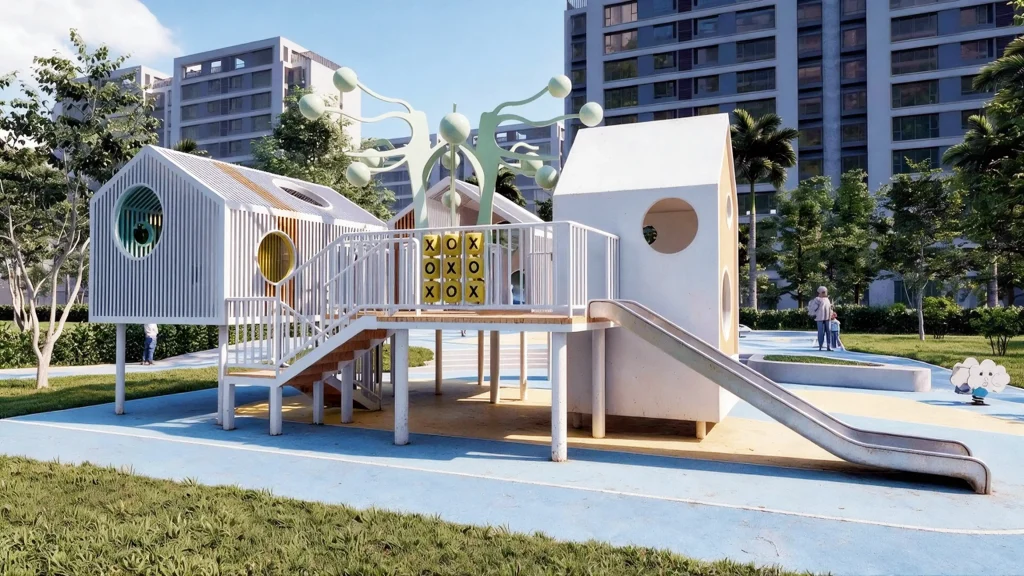
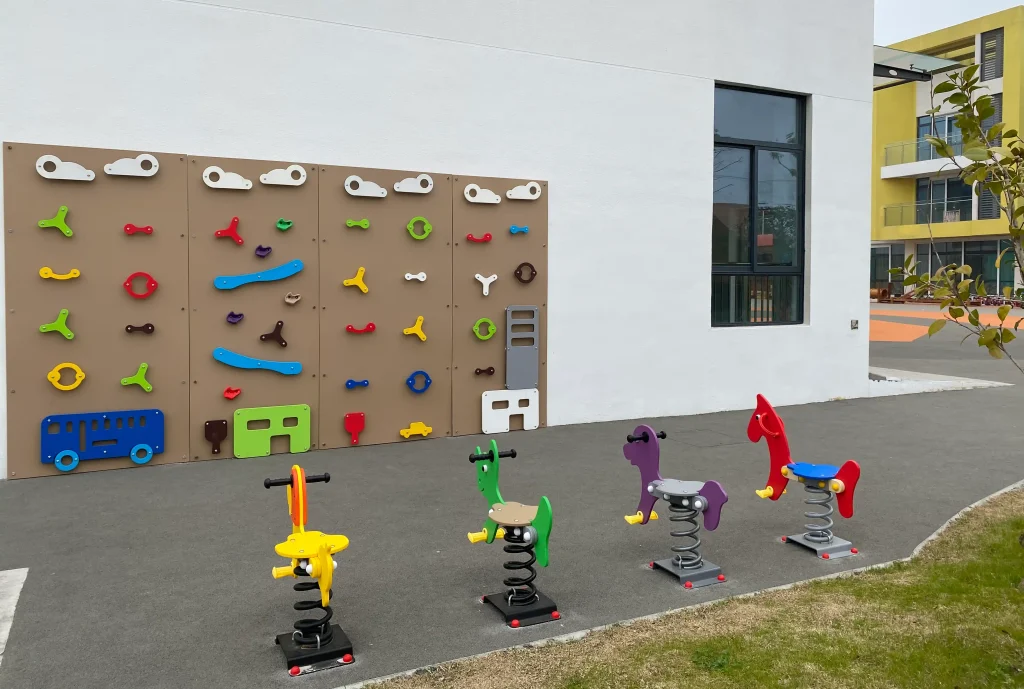
The equipment mix should follow the performance brief rather than a catalogue shopping list. Freestanding play structures can add sensory, musical, social, swinging, spinning or rocking experiences without placing every activity on one large composite structure. That flexibility may help a design team balance play value, circulation and budget.
Does Inclusive Design Always Mean a Much Higher Budget?
No. Inclusive design does not require every component to be the most specialised or expensive option. It requires the play environment to offer meaningful participation through coordinated routes, varied activities, clear space, social interaction and appropriate support for different abilities.
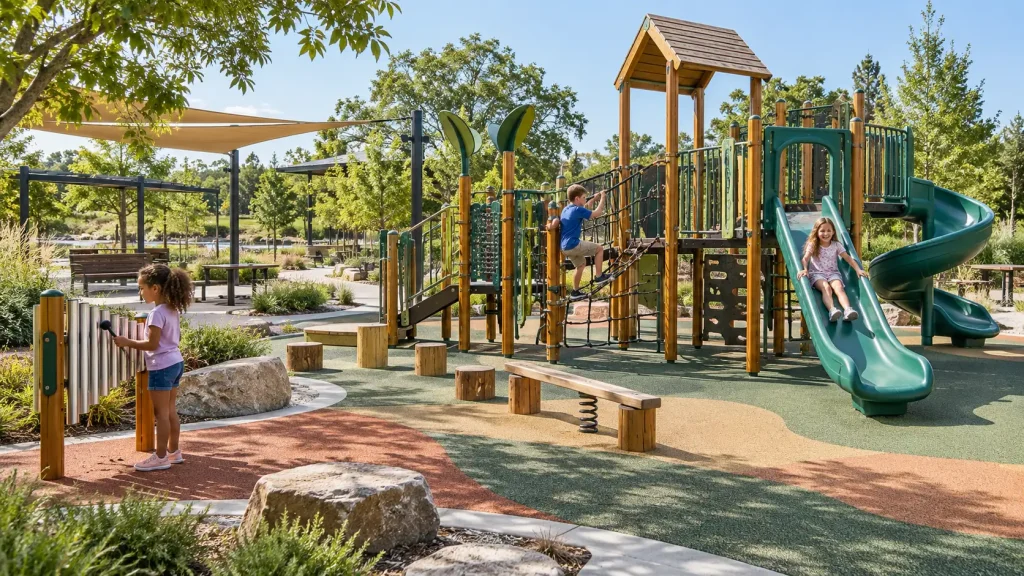
A budget-conscious concept may combine an accessible route with ground-level sensory and musical activities, social play, selected transfer opportunities and carefully chosen elevated access. A ramp-accessible structure may be appropriate where the brief calls for it, but adding a ramp to one structure does not by itself make the whole playground inclusive.
Budget decision rule
Prioritise outcomes first: arrival and circulation, choice of play experiences, social participation, sensory variety, challenge range and caregiver access. Then select the equipment combination that delivers those outcomes within the verified site and budget constraints.
How Do Surfacing and Site Conditions Affect Cost?
Safety surfacing should be budgeted from the approved equipment layout, applicable use zones and fall heights—not from the gross site area. The selected system, required performance, sub-base, drainage, edge details and installation method all affect the final amount.
Site conditions can be equally important. Before treating a preliminary equipment plan as a project budget, investigate:
- existing equipment, paving or structures that require removal;
- finished levels, slopes, drainage and water management;
- underground services, soil and excavation conditions;
- foundation interfaces and surrounding landscape work;
- delivery access, unloading, lifting and secure storage.
Cost limitation: A concept-stage surfacing quantity can change when the equipment selection, fall heights, use zones, finished levels or local requirements change. Treat it as provisional until the coordinated layout and surfacing specification are approved.
How Do Delivery, Installation and Local Project Costs Change the Budget?
Destination and responsibility allocation can change total project cost even when the equipment package is unchanged. Freight, customs, inland transport, unloading, lifting, storage, local labour, foundations, surfacing installation and inspection may be supplied by different parties.
Ask each supplier to state the delivery basis and exclusions. Then confirm who will receive the shipment, inspect packages, store components, set out the site, build foundations, assemble equipment, install surfacing, correct defects and provide closeout records. A responsibility gap is both a cost risk and a programme risk.
For a broader readiness and responsibility framework, use AegisPlay’s commercial playground installation planning guide.
How Should You Compare Inclusive Playground Quotations?
Compare quotations line by line against the same approved scope. Equipment price alone is not a reliable measure of total value when drawings, surfacing, spare parts, packing, freight, installation support, documentation and local work differ.
| Scope item | Confirm in writing | Common comparison error |
|---|---|---|
| Equipment package | Models, quantities, materials, finishes, age range and approved options | Comparing visually similar but technically different configurations |
| Technical deliverables | Layout, foundation information, manuals, BOM and agreed reports | Assuming all project drawings and documents are included |
| Commercial boundary | Currency, validity, taxes, freight basis, packing, payment terms and exclusions | Comparing delivered cost with an equipment-only or port-based figure |
| Site and installation | Foundations, labour, supervision, lifting, surfacing, inspection and handover | Leaving local costs outside the comparison |
| After-sales scope | Agreed defect process, parts responsibilities, response route and project-specific terms | Treating general sales language as a contractual commitment |
Representative Planning Scenario
This is an illustrative scenario, not an AegisPlay case study or price quotation. Two projects each have a 500 m² site. Project A uses a compact equipment zone, several ground-level inclusive activities, limited customisation, a prepared site and a local installer. Project B uses ramp-connected elevated play, musical and sensory equipment, a custom theme, broader safety surfacing, drainage work and difficult delivery access. The sites are equal in area, but the design and execution scopes are not; a square-metre comparison would conceal the real cost difference.
How Do Safety and Accessibility Requirements Affect Planning?
The applicable safety and accessibility requirements depend on the market, equipment type and project. They can influence layout, routes, component selection, clearances, surfacing, documentation, inspection and local professional services. Confirm the jurisdiction and applicable editions before design approval or procurement.
For U.S. public playground equipment within its stated scope, ASTM F1487-25 provides safety and performance requirements for various equipment types and dimensional requirements for clearance and use zones. ASTM’s published scope also states that the specification does not generally address accessibility except for safety issues not covered by the U.S. Department of Justice’s 2010 Standards for Accessible Design.
The U.S. CPSC Public Playground Safety Handbook provides practical guidance on planning, layout, protective surfacing, installation, inspection and maintenance. The U.S. Access Board play-area guide explains accessible routes and ground-level and elevated play-component requirements under the ADA Standards.
Regulatory boundary: A standard, government guide, test report and product certification are not interchangeable. Ask what product and configuration a document covers, which edition was used, who issued it and whether it satisfies the project’s contract and local requirements.
What Should You Prepare for an Inclusive Playground Budget Estimate?
You do not need a finished design, but you do need enough information to define the first pricing boundary. A CAD file is helpful; a dimensioned plan, marked-up image or clear sketch can also support an initial discussion.
Estimate-Readiness Checklist
- Location: country, city and final delivery point.
- Site: dimensions, usable play area, levels, photos, access and known constraints.
- Users: age groups, expected capacity and supervision context.
- Inclusive outcomes: mobility, sensory, social, communication and challenge priorities.
- Play programme: desired climbing, sliding, swinging, spinning, sensory, musical, imaginative and social activities.
- Requirements: applicable standards, tender specifications and required documents.
- Budget: target range and whether it covers equipment only or the whole project.
- Responsibilities: surfacing, civil work, freight, customs, installation, inspection and handover.
- Programme: target approval, delivery, installation and opening dates.
AegisPlay works as a Commercial Playground Manufacturer & Project Solutions Partner. Depending on the agreed project scope, support may include requirements gathering, product configuration, custom requirements, project drawings, manufacturing coordination, production follow-up, QC coordination, logistics planning, installation guidance and after-sales communication. Review the available AegisPlay project services and confirm the exact responsibility boundary in the project quotation and contract.
Start With the Site and the Intended Outcome
Send the project location, site dimensions, target age groups, inclusive priorities, preferred activities and expected installation scope. If you have a CAD plan, photos, brief or target budget, include those too. AegisPlay can use that information to discuss a more realistic equipment and project scope.
Frequently Asked Questions
How much does an inclusive playground cost?
There is no reliable universal price without a defined location and scope. Equipment, accessible routes and play choices, surfacing, site work, freight, installation, professional services and local requirements all affect the result. A supplier needs at least a site brief, user needs, destination and responsibility boundary to prepare a useful estimate.
Can inclusive playground cost be estimated per square metre?
A square-metre figure may support a very early internal allowance, but it should not be treated as a quotation. Gross site area does not show equipment density, use zones, fall heights, surfacing type, ground conditions, customisation or local construction scope. Use a project-specific cost model before approving a budget.
Is safety surfacing included in a playground equipment quote?
Sometimes, but never assume it is. Confirm the surfacing system, area, thickness or performance basis, sub-base, edging, freight and installation responsibility. If surfacing is excluded, obtain a coordinated local allowance based on the same approved equipment layout and applicable safety requirements.
Do ramps always make an inclusive playground more expensive?
Ramps can increase structure size, materials and surfacing area, but the budget impact depends on the design. Inclusive planning can also use connected ground-level activities, sensory and musical play, social spaces and transfer opportunities. The right mix should follow the user brief and applicable accessibility requirements.
What is the difference between equipment cost and total project cost?
Equipment cost covers the defined product package and any specifically included supplier services. Total project cost may also include surfacing, civil work, freight, customs, inland delivery, unloading, installation, lifting, professional fees, inspection, handover and contingency. Compare quotations only after these boundaries are visible.
What can I send if I do not have a CAD plan?
Send site dimensions, a marked-up image, survey extract, sketch or photos with a known reference measurement. Add the location, target ages, inclusive priorities, preferred activities, approximate budget and installation expectations. The first objective is to establish a credible design and pricing boundary, not to present a finished design.