Quick Answer
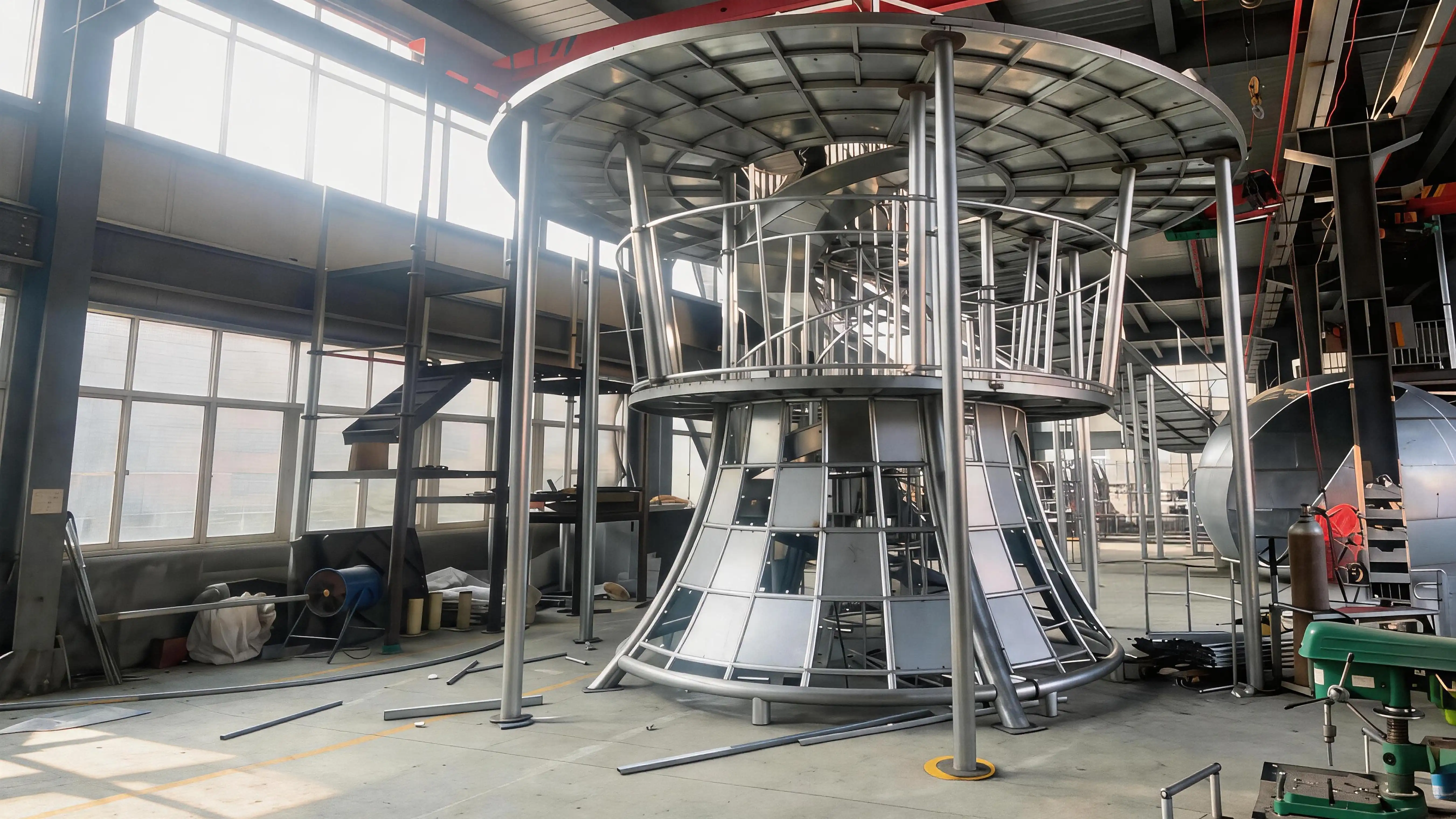
A commercial playground manufacturer should be evaluated by more than factory size or equipment price. Professional buyers need to understand who controls design, specifications, manufacturing routes, quality checks, documentation, delivery and after-sales. AegisPlay combines its own manufacturing capabilities with specialized production resources under one coordinated project-management and QC system.
Choosing a commercial playground manufacturer is not only about finding the lowest equipment price. Professional buyers also need to understand who designs the project, where different products are manufactured, how specifications are controlled, what quality checks happen before shipment, which safety requirements apply, and who remains responsible after delivery. AegisPlay combines its own manufacturing capabilities with specialized production resources across different playground categories.
Backed by a team with more than 20 years of industry experience, we manage projects through one coordinated process covering design, manufacturing, quality control, delivery, installation support and after-sales.
Key Takeaways
01. Manufacturing route should match the product. Not every playground category benefits from being forced through the same production process.
02. One project team should retain control. Specification, order follow-up, QC, delivery and after-sales need clear ownership even when different manufacturing resources are involved.
03. QC must follow the approved project specification. Buyers should know what will actually be checked before shipment and what evidence will be available.
04. Standards are scope-specific. A playground safety standard, management-system standard and government guidance are not interchangeable.
Table of Contents
02.How Does the AegisPlay Commercial Playground Manufacturer Model Work?
03.What Commercial Playground Equipment Can AegisPlay Supply?
04.How Does Custom Playground Equipment Move from Idea to Production?
05.How Does AegisPlay Manage Playground Quality Control?
06.What Safety Standards and Documents Should Buyers Check?
07.Price, Lead Time, Shipping and Installation Support
08.How Should a Buyer Evaluate AegisPlay Before Ordering?
09.FAQ
What Is AegisPlay?
AegisPlay is a commercial playground manufacturer and project solutions partner combining in-house manufacturing with specialized production resources. Some product categories are manufactured through our own production capability, while others are matched with manufacturing partners according to the process, materials and technical requirements involved. One AegisPlay team remains responsible for project coordination, QC and customer support.
The team behind AegisPlay brings more than two decades of playground industry experience.
That experience matters because commercial playground procurement rarely involves a single material or process. A project may combine steel structures, rope systems, HDPE panels, molded plastics, soft-play materials, musical components, fasteners and customized decorative elements.
Trying to force every product through one production line is not always the most effective approach.
Build–Match–Control Manufacturing Model
| Layer | How It Works | Buyer Benefit |
|---|---|---|
| Build | Products within our suitable in-house production scope are manufactured through our own capabilities. | Direct manufacturing knowledge and control |
| Match | Specialized categories are assigned to manufacturing resources with the relevant process and technical capability. | Broader product and process coverage |
| Control | AegisPlay manages specification, order follow-up, QC, delivery and after-sales. | One responsible customer-facing team |
The right manufacturing capability should be matched to the right product, while project responsibility remains clear.
How Does the AegisPlay Commercial Playground Manufacturer Model Work?
A commercial playground manufacturer does not need to force every product category through one production facility to provide effective manufacturing control. What matters is whether the supplier can define the specification, select suitable production capability, verify quality, coordinate documentation and remain accountable to the buyer throughout the project. AegisPlay uses both in-house and specialized manufacturing routes under one project-management system.
Different equipment requires different manufacturing expertise. For example, a custom outdoor structure may require a completely different manufacturing route from:
- a spatial rope climber
- an indoor soft-play system
- an outdoor musical instrument
- a fitness structure
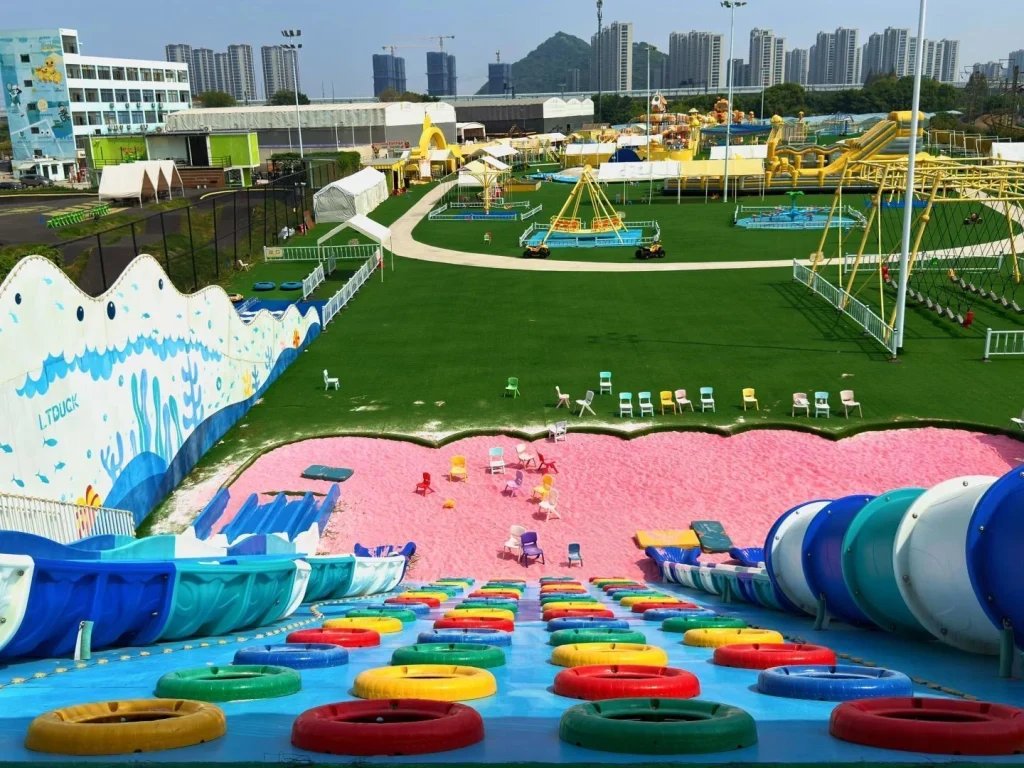
- a modular obstacle system
A single project can even contain several of these categories.
Rather than asking, “Can one factory produce all of them?” the better procurement question is: Who controls the specification and quality across all of them?
For AegisPlay projects, the customer works with one project team. That team coordinates:
- project requirements
- product selection
- design
- technical specifications
- manufacturing route
- production follow-up
- QC
- packaging
- logistics
- installation support
- after-sales
This structure also allows project pricing to be built closer to actual manufacturing resources rather than through unnecessary sourcing layers.
What Commercial Playground Equipment Can AegisPlay Supply?
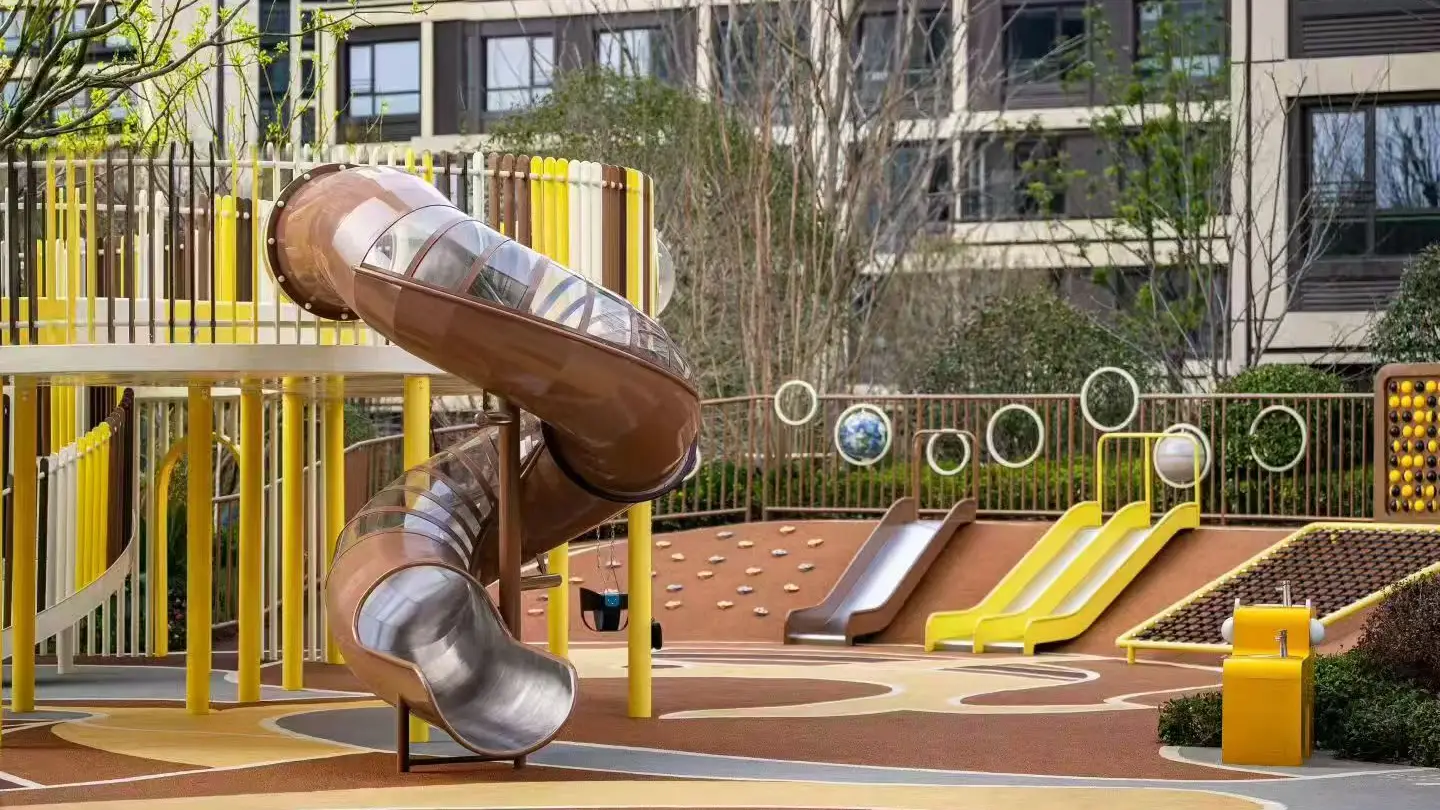
As a commercial playground equipment manufacturer and project supplier, AegisPlay supports multiple equipment categories rather than one narrow product line. The appropriate manufacturing route depends on each product’s structure, materials, process and project requirements, so buyers should always evaluate the specification of the quoted equipment rather than assume that every category is produced in exactly the same way.
Current AegisPlay categories include:
- outdoor playground structures
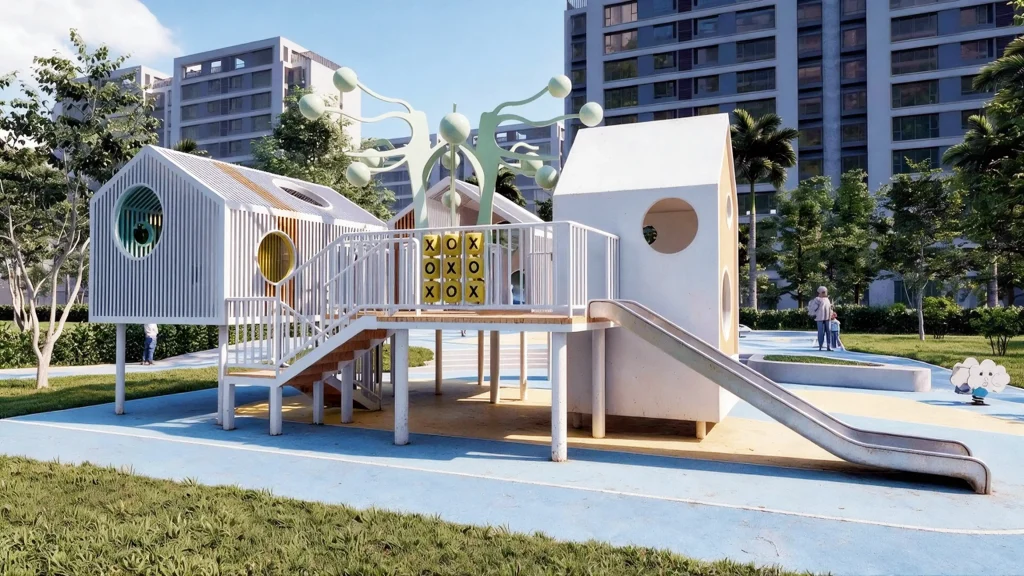
- custom and themed playgrounds
- plastic play systems
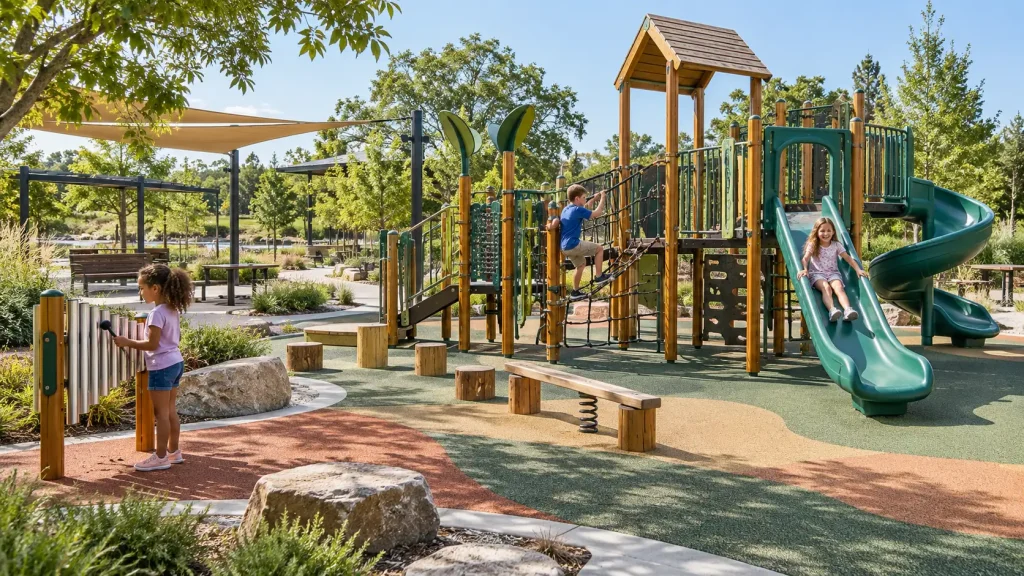
- wooden and nature-inspired playgrounds
- rope play structures
- indoor soft play
- outdoor fitness equipment
- calisthenics systems
- modular active play
- outdoor musical instruments
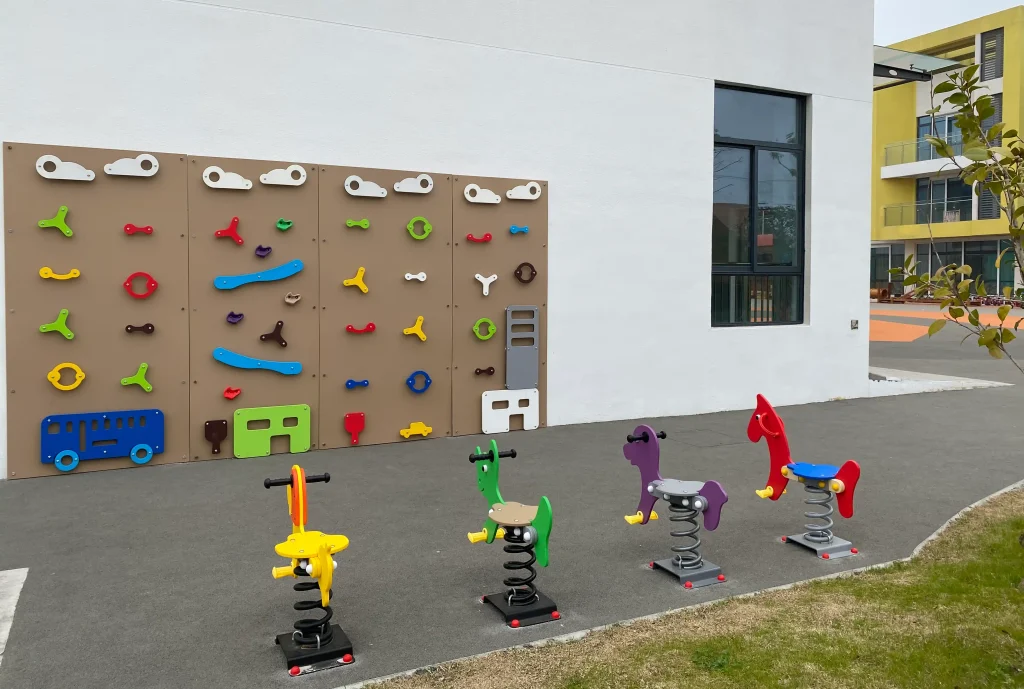
- spring riders and other freestanding play elements
Explore AegisPlay product categories: Commercial Playground Equipment
Different Products Require Different Materials
Current product listings include examples such as:
- steel-core wire rope
- hot-dip galvanized steel tubes
- pressed aluminum clamps
- HDPE
- galvanized steel pipe
- LLDPE
- stainless steel fittings
- plywood
- PVC / PU surfaces
- EPE foam
- aluminum musical components
These materials already vary substantially between rope, outdoor, indoor, fitness and musical products.
A professional buyer should therefore request the specification for the actual quoted model, not rely on a generic material statement from a website.
How Does Custom Playground Equipment Move from Idea to Production?
A custom playground equipment manufacturer should not begin production from a vague visual reference alone. Before manufacturing, the project should sufficiently define the site, user group, layout, dimensions, product configuration, materials, colors, documentation requirements and commercial scope. The more customized the equipment, the more important specification control becomes before production starts.
AegisPlay’s current services already describe a workflow including requirements gathering, feasibility assessment, 3D renderings, CAD drawings and BOM-based pricing.
AegisPlay Project Fit Framework
01
Site
Where is the equipment going?
02
Users
Who will use it?
03
Play Objective
What should children or users be able to do?
04
Compliance
Which market, standard or documentation requirement applies?
05
Delivery
How will manufacturing, shipping and installation be handled?
Design-to-Production Workflow
- Project brief
- Site information
- Concept and layout
- Technical coordination
- Quotation and scope
- Customer approval
- Specification freeze
- Manufacturing-route assignment
- Production
- QC and delivery
Change-control reminder: A late change can affect price, lead time, packaging, drawings and installation. Major post-approval changes should be recorded rather than handled informally through scattered chat messages.
Start With Your Actual Project Information
Send AegisPlay your site dimensions or CAD file, project country, target users, preferred equipment or visual references and expected timeline. The team can then discuss a project-specific manufacturing pathway instead of beginning with a generic catalog quotation.
How Does AegisPlay Manage Playground Quality Control?
Playground quality control should follow the approved project specification regardless of whether a product is manufactured in-house or through a specialized production partner. AegisPlay uses a project-based QC model that connects requirement confirmation, manufacturing-route selection, production follow-up, pre-shipment inspection and after-sales feedback so that quality responsibility does not disappear between different production sources.
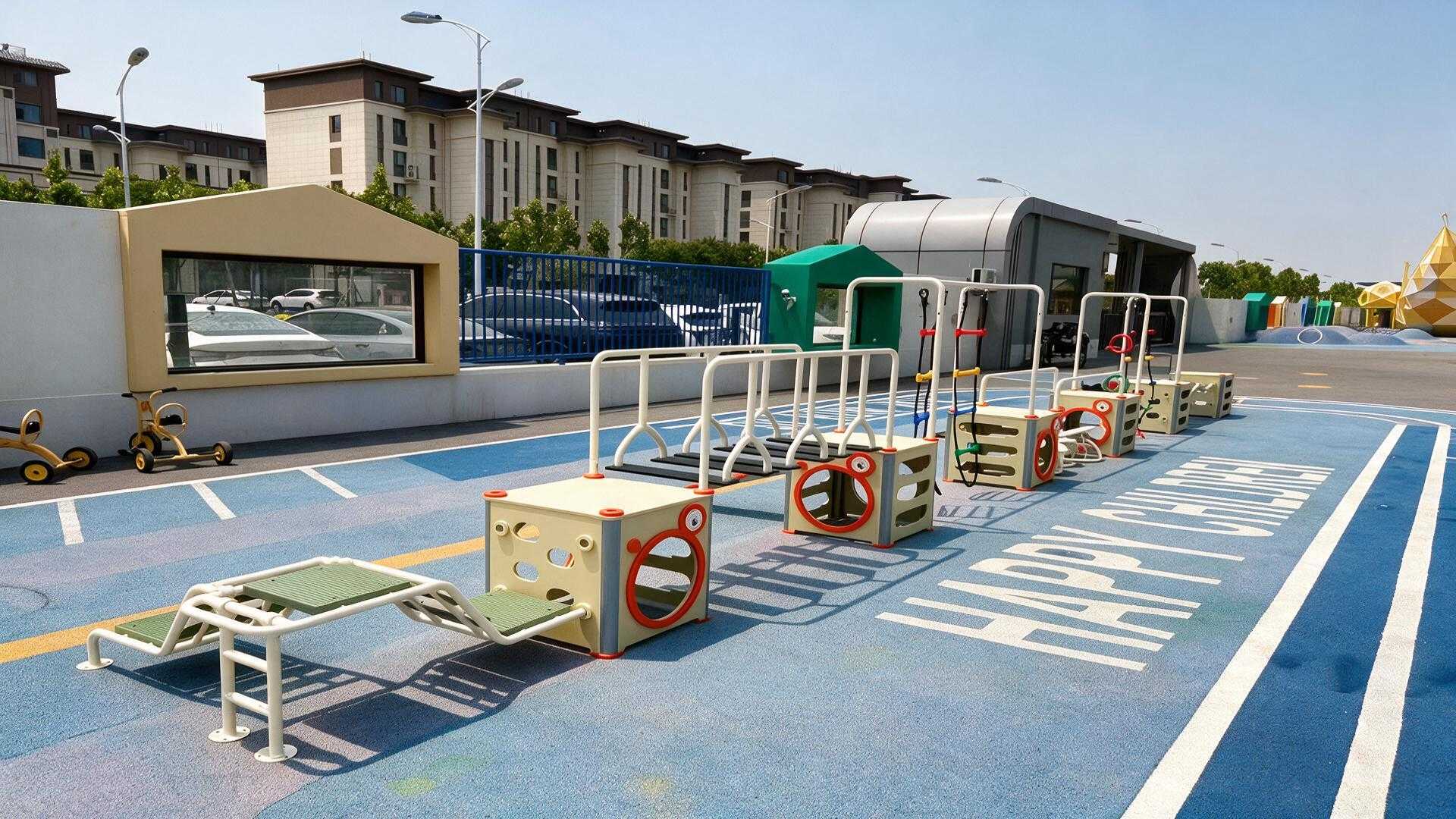
Two Manufacturing Routes, One QC System
For in-house production, quality checks can be integrated directly into manufacturing.
For partner production, AegisPlay can use project-specific controls such as:
- approved drawings and specifications
- production progress evidence
- key-component confirmation
- photos or video where appropriate
- pre-shipment inspection
- corrective-action records
Six QC Gates
Gate 1 — Requirement Confirmation
Confirm the product, quantity, major dimensions, material, color and special requirements.
Gate 2 — Specification Freeze
Define which approved drawing, BOM or specification controls production.
Gate 3 — Manufacturing Assignment
Record whether the item is produced in-house, by a specialist manufacturing resource, or through a mixed route.
Gate 4 — Production Follow-Up
Check relevant progress and key requirements according to project risk.
Gate 5 — Pre-Shipment Inspection
Check appropriate items such as quantity, appearance, major components, accessories, packaging, identification and required documents.
Gate 6 — After-Sales Feedback
If a manufacturing problem or repeated issue appears after delivery, the result should feed back into future manufacturing-resource evaluation.
The key buyer question is not “Do you have QC?” It is: What exactly will be checked before my order ships, and what evidence will be available?
What Safety Standards and Documents Should Buyers Check?
A playground safety standard is not automatically the same as a manufacturer certificate, and one standard does not cover every playground category. The applicable requirement depends on product type, user age, destination market, jurisdiction and the edition of the relevant standard. Buyers should verify the exact scope of any certificate or test report instead of relying only on certification logos.
For U.S. public playgrounds, the 2025 CPSC Public Playground Safety Handbook provides federal safety guidance and notes that state or local authorities, insurers or other parties may impose additional requirements.
ASTM currently lists ASTM F1487-25 for playground equipment for public use. Importantly, its scope excludes soft-contained play equipment.
For soft-contained play equipment, ASTM currently lists ASTM F1918-21 as the active specification.
For European public-playground projects, BSI lists BS EN 1176-1:2017+A1:2023 as current for general playground equipment and surfacing safety requirements and test methods. Additional EN 1176 parts may apply depending on equipment type.
Standards Are Not the Same Thing
| Type | Example | Meaning |
|---|---|---|
| Product / Safety Standard | ASTM F1487, ASTM F1918, EN 1176 | Technical requirements for defined product scopes |
| Government Guidance | CPSC Handbook | Safety guidance; local requirements may also apply |
| Management System | ISO 9001 | Quality-management system, not a playground product safety certificate |
Publishing review note: As stated in the existing article, ISO 9001:2015 was the current published edition as of August 2026 while a new 2026 edition was under publication and expected to replace it. Older ISO 9001:2008 wording visible on some AegisPlay product listings should therefore be reviewed before publication of the final page.
Supplier Documentation Checklist
- product specification
- drawings
- BOM or equipment schedule
- installation instructions
- foundation information
- applicable test/certification documents
- packing list
- maintenance guidance
- warranty terms
- spare-part information
How Are Price, Lead Time, Shipping and Playground Installation Support Managed?
Commercial playground pricing, lead time and installation should be calculated at project level rather than treated as one universal number. Equipment category, customization, manufacturing route, approval cycles, order volume, destination and installation scope all affect the final commercial plan, so a useful quotation should clearly separate production scope, logistics and site responsibilities.
Pricing
AegisPlay’s manufacturing model is designed to connect pricing closely to the actual manufacturing source.
This helps reduce unnecessary sourcing layers while allowing different products to use different production capabilities.
MOQ
There is no single AegisPlay MOQ for every commercial playground project.
Some products may have a specific minimum quantity, while many playground projects are quoted based on the actual site and equipment scope.
Lead Time
Production lead time is affected by:
- design complexity
- customization
- drawing approval
- equipment category
- production schedule
- project size
Shipping time should be calculated separately.
Playground Installation Support
Installation planning should clarify before shipment:
- foundations
- unloading
- storage
- lifting equipment
- local labor
- assembly
- surfacing
- supervision
- inspection
- handover
AegisPlay can coordinate installation pathways according to project location and requirements, including local resources or project-specific technical/on-site support.
Read the full guide here: Commercial Playground Installation Guide
How Should a Buyer Evaluate AegisPlay Before Ordering?
A professional buyer should evaluate AegisPlay in the same way they would evaluate any commercial playground manufacturer. Check real manufacturing capability, technical understanding, project documentation, QC process, applicable standards, commercial scope and after-sales responsibility. A supplier should be judged by the evidence and control behind the project—not only by the size of a factory photograph.
AegisPlay Buyer Evaluation Framework
| Area | Buyer Questions |
|---|---|
| Manufacturing | Can the supplier explain what it manufactures directly? When are specialist production resources used? Can relevant facilities be visited where appropriate? |
| Design | Can it work from site plans? Can it provide drawings or 3D coordination where required? Does the quotation match the approved design? |
| QC | Is there a pre-shipment process? Is responsibility clear across manufacturing routes? Are major defects prevented from shipping? |
| Compliance | Is the correct standard identified? Is certificate/report scope clear? Is the document holder identifiable? |
| Commercial | What is included and excluded? What is MOQ? What affects lead time? Who pays for installation and logistics? |
| After-Sales | Who receives the problem? How are missing parts handled? How are large failures investigated? What warranty terms apply? |
This is also how AegisPlay intends to build long-term buyer confidence.
Our manufacturing model is not based on the idea that one production line should make every product.
Real manufacturing capability where we produce directly, specialized manufacturing expertise where the product requires it, and one AegisPlay team controlling the project experience.
Final Project Readiness Checklist
- Country and city
- Indoor or outdoor
- Site dimensions / CAD
- Target age group
- Equipment categories
- Theme / design references
- Expected budget range
- Required standards
- Required documents
- Target completion/opening date
- Installation requirement
Discuss Your Commercial Playground Project
Send AegisPlay your site information, project location, target users, equipment requirements and expected timeline. Our team can help determine the appropriate design, manufacturing route, QC plan, delivery scope and installation pathway for your project.
FAQ
1. Is AegisPlay a commercial playground manufacturer?
Yes. AegisPlay operates its own manufacturing capability and also coordinates specialized production resources for selected product categories. This integrated model allows different playground products to use suitable manufacturing processes while one AegisPlay team manages project specifications, quality control, delivery and customer support.
2. Does AegisPlay manufacture every product in its own factory?
No. Part of the product range is produced through AegisPlay’s own manufacturing operations, while other categories may use specialized manufacturing partners where different machinery, materials or technical processes are more appropriate. The goal is to match the product with suitable production capability rather than force every category through one facility.
3. Can customers visit the AegisPlay factory?
Yes. Customers can discuss visiting AegisPlay’s manufacturing facility. Where a project involves additional specialist production processes, visits to relevant production facilities may also be coordinated when appropriate and agreed in advance.
4. Can AegisPlay customize commercial playground equipment?
Yes, subject to technical feasibility. Customization may include layout, dimensions, colors, product configuration, themes, selected materials and branding. More complex projects usually require site information, design coordination, quotation review and specification approval before manufacturing begins.
5. What standards can AegisPlay support?
The applicable standard depends on product category and destination market. ASTM F1487 applies to defined public-use playground equipment in the U.S. but excludes soft-contained play equipment, for which ASTM F1918 is a separate standard. European projects may involve EN 1176 and additional local requirements. Documentation should therefore be confirmed for the actual quoted equipment.
6. Does AegisPlay have a minimum order quantity?
There is no universal MOQ for all AegisPlay commercial playground projects. Many projects are quoted according to actual site and equipment requirements. Individual products may have minimum quantities due to manufacturing or packaging conditions, in which case the requirement should be confirmed during quotation or stated on the product page.
7. What happens if there is a problem after delivery?
Customers contact the AegisPlay project team rather than managing manufacturing parties themselves. The team collects relevant photos, videos and product information, determines the likely cause, and coordinates an appropriate solution such as technical guidance, replacement parts, repair support or another agreed corrective action. Warranty and freight responsibility depend on the product, cause and agreed project terms.
AegisPlay Editorial Team
Commercial Playground Manufacturer & Project Solutions Partner